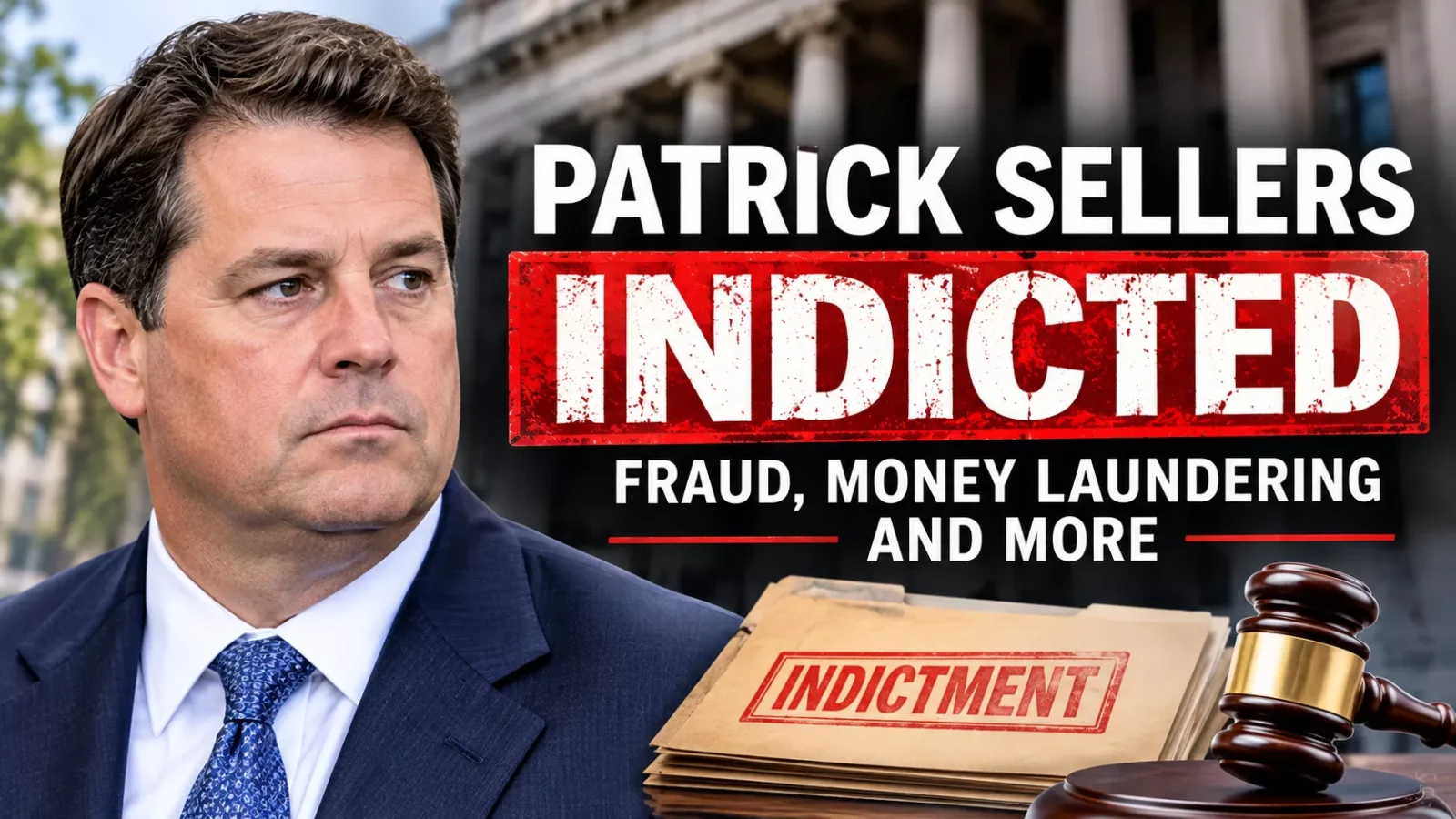
Alabama state Rep. Patrick Sellers, a Birmingham-area Democrat who was re-elected this month, has been indicted on four federal counts of wire fraud. Prosecutors say he obtained more than $240,000 in COVID-era grants and loans between July 2020 and May 2021 and spent much of it on personal bills. He pleaded not guilty on Thursday. That is the whole story in two sentences: these are charges, not a conviction, and the case has barely started. But the indictment, as described by the Justice Department and the reporters who have read it, is specific enough to be worth walking through.
What the indictment charges
According to the U.S. Attorney’s Office for the Northern District of Alabama, Patrick Lorn Sellers, 53, of Pleasant Grove, faces four counts of wire fraud. He has represented Alabama House District 57 since November 2022. The release says he solicited the money from the federal government, the state of Alabama, and an Alabama-based nonprofit, and that the FBI investigated the case.
The government’s account of where the money went will get the most attention. The release lists personal credit card payments, personal mortgage payments, personal loan payments, water bills, and college tuition payments. Each count of wire fraud carries a maximum of 20 years in prison, though maximums are rarely what anyone actually receives, and nothing has been proven.
Prosecutors were also careful on one key point. U.S. Attorney Phillip W. Williams Jr. said the allegations do not involve Sellers’ work as a state representative, WBHM reported. In other words, this is not a bribery or vote-selling case. It is a pandemic-relief fraud case that happens to involve a sitting lawmaker.
A church convention sits at the center of it
The Alabama Political Reporter, which read the indictment, says the alleged scheme ran largely through two nonprofits: the Alabama State Missionary Baptist Convention, where Sellers, a pastor, had served as chief of staff to the convention’s president, and a second group called Project Zion. Of the eight grants and loans in the case, prosecutors say seven were obtained for those two organizations.
APR reports that Project Zion claimed 10 employees on its applications, while state labor records reportedly show it never had any. It also reports that the convention’s president wrote to the Small Business Administration saying someone had “surreptitiously applied for and received the loan” in the convention’s name. That is the president’s description of what happened, as quoted in the indictment, not a court finding.
The Alabama Reflector adds dollar figures to several pieces: a $20,000 Economic Injury Disaster Loan allegedly used on credit card and water bills, and two state grants of $15,000 and $20,000 allegedly used for an auto loan and tuition.
The lawn care loan
The eighth item is a Paycheck Protection Program application in the name of Sellers Lawn Care. According to WBHM, the application reported gross income of nearly $98,000, and Williams said the IRS had no record of the tax filing that should have supported it. The local outlets don’t fully agree on the details of that tax paperwork, so I’d wait for the trial record before treating the specifics as settled.
Williams didn’t hedge at his press conference. “The evidence here is overwhelming, and the grand jury agreed,” he said, per WBHM. That is a prosecutor’s view. A grand jury indictment means only that there was enough to charge, not that the evidence will hold up before a trial jury.
What Sellers and his lawyer say
Sellers pleaded not guilty and was released on a $5,000 bond, the Reflector reported. His attorney, Matt Hart, is a name Alabama readers will know: he led the state’s prosecution of former House Speaker Mike Hubbard in 2016. Hart declined to discuss the substance of the case, telling the Reflector that “the government’s case is still emerging.” I found no public statement from Sellers, House Democratic leadership, or the convention as of Friday.
The DOJ release ends with the standard line, and it’s worth repeating rather than skimming past: “An indictment contains only charges.” Sellers is presumed innocent unless he is proven guilty.
Why this case is worth watching
Pandemic relief programs moved hundreds of billions of dollars quickly, with light verification, and federal prosecutors have spent years since working through the fraud cases that followed. What makes this one stand out is not the dollar figure. At roughly $240,000, it is small by the standards of the cases DOJ usually publicizes. What stands out is the alleged method: using nonprofit and church entities, rather than a shell company, as the vehicle.
If the government’s account holds up, the lesson for any small organization is uncomfortable and practical. A nonprofit that lets one trusted person control its bank accounts and its grant applications has no way of knowing what is being filed in its name. According to the indictment as reported, the convention’s president says he did not know about at least one loan taken out in its name. That is a governance failure no matter how the criminal case ends. It’s the same pattern I wrote about in the $129 million AI deepfake CEO fraud case: the money usually moves because one person was trusted to approve it.
The timing will also draw questions. Sellers was re-elected this month without opposition, according to APR, and the alleged conduct dates back five years. Prosecutors haven’t said when the investigation began beyond noting that someone reported suspicious activity. Williams also declined to say whether anyone else could be charged.
What others are saying
- The Justice Department laid out the four counts, the July 2020 to May 2021 time frame, the alleged personal uses of the money, and the presumption of innocence.
- WBHM covered the press conference, including the PPP application and Williams’ statement that the case does not involve Sellers’ legislative work.
- Alabama Political Reporter reported the indictment ahead of the announcement and detailed the role of the Baptist convention and Project Zion.
- Alabama Reflector reported the not-guilty plea, the bond, and Sellers’ lawyer’s response.
My take
On paper, this is a strong federal indictment with specific transactions and specific personal expenses attached to each count. That is not the same as a conviction, and Sellers has a well-known defense lawyer who has been on the other side of a major Alabama corruption case. Here is what to watch: whether the convention’s leadership testifies, whether the tax-record dispute holds up, and whether anyone else is charged. Until a jury rules, the accurate description is the one I’ve used throughout: a sitting lawmaker charged with, and denying, pandemic-relief fraud. For how quickly fraud allegations can outrun the paperwork, see my piece on the fake SEC registration crypto case.
Sources
- U.S. Attorney’s Office, Northern District of Alabama: “Alabama State Representative Arrested on Fraud Charges” (Nov. 19, 2026)
- WBHM: Alabama state Rep. Patrick Sellers indicted in alleged COVID relief fraud scheme (Nov. 19, 2026)
- Alabama Political Reporter: Federal indictment accuses state Rep. Patrick Sellers of fraud involving more than $240,000 (Nov. 19, 2026)
- Alabama Reflector: Alabama Rep. Patrick Sellers indicted on federal fraud charges (Nov. 19, 2026)