The SEC says two crypto outfits raised more than $130 million from ordinary investors by waving the SEC’s own paperwork in their faces. On October 29, the Securities and Exchange Commission sued BG Wealth Sharing Ltd and DSJ Exchange Pty Ltd, alleging the pair used false filings and fake “SEC registration certificates” to convince tens of thousands of people their “wealth-sharing program” was licensed and safe. These are civil allegations, not findings. But the trick at the center of the case is one every investor should understand, because it works precisely on careful people who check.
What the SEC alleges
According to the SEC’s announcement, both companies were incorporated in Colorado but operated from abroad. From at least October 2025 through June 2026, they allegedly recruited investors in more than 40 U.S. states and several U.S. territories into a program that promised risk-free returns from trading “signals” for crypto assets.
The complaint, filed in federal court in the Northern District of California, lays out the pitch in detail:
- Monthly returns of at least 60%, and the claim that investors could double their money in 40 days.
- “Zero-risk” investing, a claimed 99.6% signal accuracy and “guaranteed fund protection.”
- BG Wealth billed itself as the world’s largest hedge fund and claimed to be registered with the SEC as an investment adviser.
- DSJ Exchange was presented as its partner, a licensed and secure crypto trading platform.
Recruitment ran through YouTube, TikTok, Facebook, Instagram and Telegram, plus weekly Zoom calls and roadshow events in cities including Las Vegas and Salt Lake City, according to the complaint. A multi-level structure rewarded investors for recruiting others.
The fake SEC registration trick
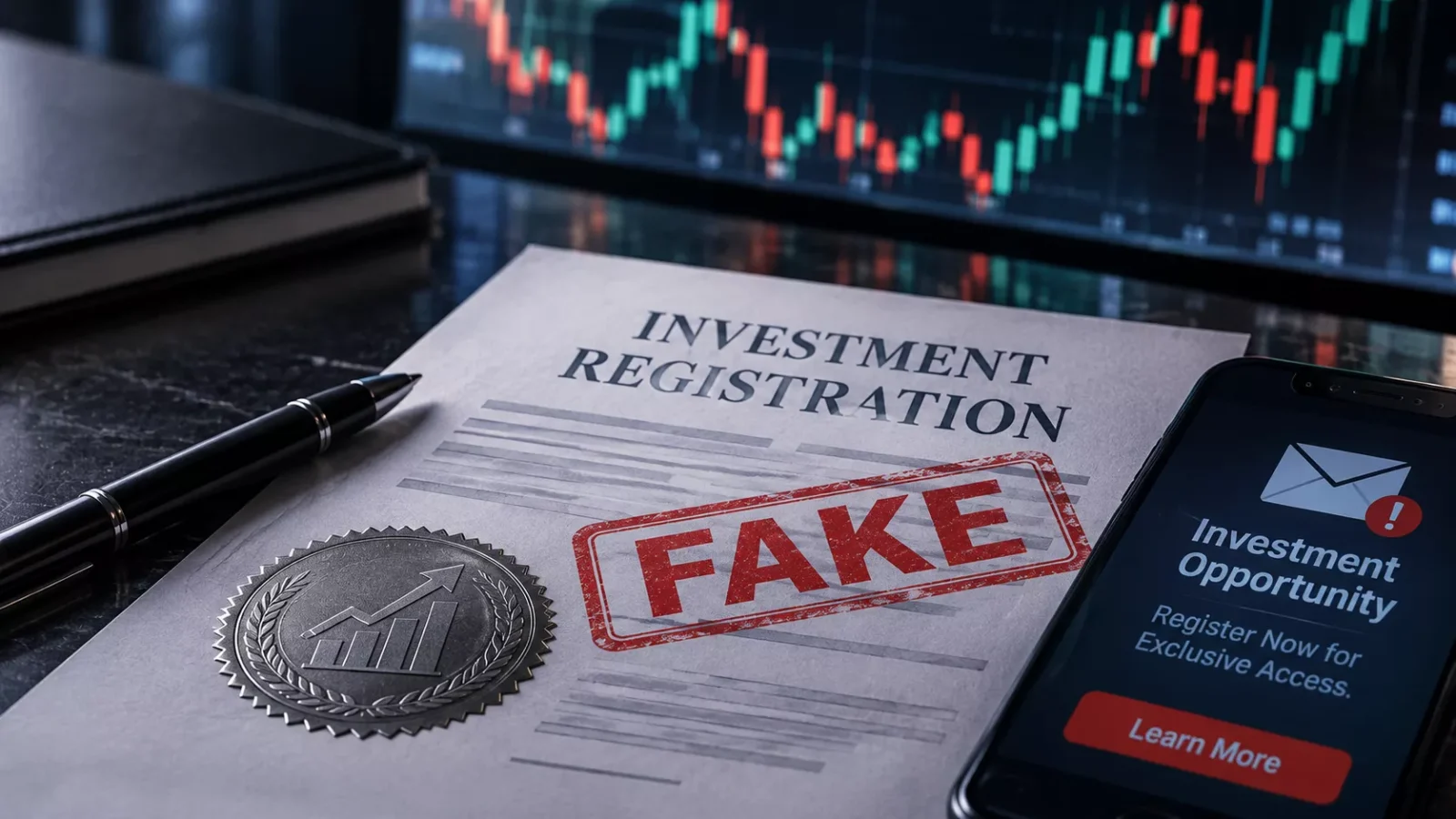
Here is the part that makes this case worth writing about. The SEC says both companies actually filed documents with the SEC: BG Wealth a Form ADV in August 2025 claiming status as an “exempt reporting adviser,” and DSJ Exchange a Form D in July 2025 claiming a $100 million offering. Those filings were public. Promoters then pointed investors to the SEC’s own databases as proof the companies were registered.
The complaint says the filings were full of false information, including an “auditor” that is not a recognized accounting firm, a virtual mailbox listed as a head office and disconnected phone numbers. It also says neither company was ever registered with the SEC, and that the “registration certificates” bearing the SEC seal were fabricated. The SEC does not issue such certificates.
The agency put it plainly in an investor alert it has been circulating: scammers are using exempt reporting adviser filings to create a false impression of legitimacy. A filing is a form someone submitted. It is not a review, an approval or a license.
Where the money went, according to the SEC
The complaint says more than $130 million came in between March and mid-June 2026 from over 223,000 blockchain addresses. Investors deposited stablecoins and ether into DSJ Exchange accounts, where the platform displayed trades and profits that the SEC alleges were fabricated. The agency says no real trading took place.
Up to $25 million allegedly flowed back to wallets likely tied to investors. The SEC calls those payments a Ponzi-like tactic used to build trust and keep money coming in, and says the rest was misappropriated. Investor losses allegedly top $100 million.
The ending, as the SEC tells it, is a familiar one. Early withdrawals worked. Later ones came with fees of up to 20% and delays. Then DSJ Exchange blocked withdrawals entirely, and investors were pushed to move their funds to another platform and pay a “tax” to unlock their accounts. The SEC says those who paid still couldn’t withdraw. Several state regulators had already issued warnings or cease-and-desist orders starting in March 2026, and the FBI seized BG Wealth’s original web domain in April, according to the complaint.
The complaint identifies BG Wealth’s alleged founder as “Stephen Beard,” who signed the Form ADV, and says the name is likely an assumed identity. He is not a defendant in the case.
What happens next
The SEC is asking the court for permanent injunctions, disgorgement of allegedly ill-gotten gains with interest, civil penalties and a bar on BG Wealth filing as an exempt reporting adviser. The press release does not say whether the companies have responded, and I found no public statement from either. The SEC also says it removed the companies’ filings from its website.
What others are saying
Securities lawyers have treated this as a teaching case. Attorney Brenda Hamilton’s write-up boils it down to the same point the SEC keeps making: an SEC filing is not the same as SEC approval. That’s the sentence I’d tape to the monitor of anyone who has ever been told “look it up, we’re registered.”
How to check before you invest
- Registration is a status, not a document. Use the SEC’s guidance on false claims of registration. An exempt reporting adviser is, by definition, exempt from registration.
- There is no such thing as an SEC certificate. If someone shows you one, you’ve learned what you need to know.
- Returns that look perfect usually are made up. Bruce Dugan wrote about why a perfect rating reads as a lie, and the same instinct applies to 60% a month with zero risk.
- Paying to withdraw your own money is the end of the story. A “tax” or “unlock fee” is the scam’s last act, not a hurdle on the way out. If you’ve lost money already, watch for the follow-up pitch. I’ve written about stock loss recovery scams that target exactly those people.
The verdict
Whatever the court ultimately decides about BG Wealth and DSJ Exchange, the method alleged here is cheap to copy. It turns your due diligence against you. The fix is to stop asking “is there a filing?” and start asking “who actually reviewed this?” The answer, for a Form ADV or a Form D, is nobody.
The SEC’s claims are allegations. Neither company has been found liable, and the case is pending in federal court.